Sharing Bicycles in the US: Prospects and the Future
After a year abroad, when I came back from Japan
in August 2017, I found that Beijing was full of sharing bicycles. In all major
cities in China, there are a large number of sharing bicycle. Those bicycles
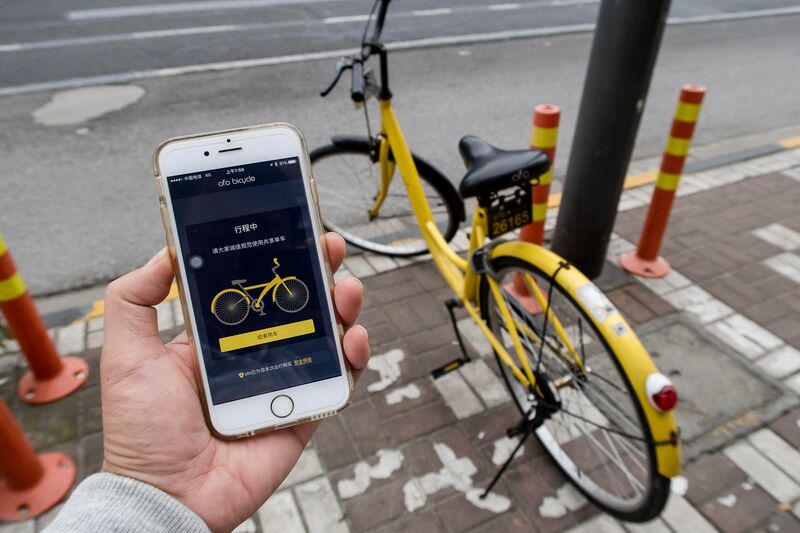
are very easy to use. One of the most famous company is called OFO, or the
“yellow bike”. It is a dock less platform which allows users to park anytime
and anywhere. With a smartphone app, users can learn where nearby bicycles are
available. People only need to scan the QR code (Quick Response Code) on the
bicycle with their smartphone to use. Using these bicycles for 30 minutes only
takes 0.5 yen (about ten cent), such cheap prices make it popular quickly. Sharing
bicycle solve
the “last mile” problems for people who don't have their own cars. From the
subway or bus station to their company or school, walking is too far away, and
taxi is too expensive. Sharing bicycle perfectly solve this problem. More
importantly, sharing bicycle does not produce pollution. It is an
environmentally friendly means of transportation. I think sharing bicycles offered
great convenience for daily traveling. If the major cities of the United States
also have sharing bicycles, it could be helpful for people’s travel. But to implement
this project in the US, there are many challenges.
The success behind this concept is
the availability of smartphones, high-speed networks, and cashless payments in
China. Among these three points, the most critical is cashless payment. For users in
other countries, there must be a unified platform for all kinds of smartphones for
cashless payments. In China, there are two platforms, Alipay and WeChat, both of
them support most smartphones systems including iOS, Android, and Windows Phone
systems. In the United States, Apple’s Apple Pay is similar to Alipay and
WeChat. However, Apple Pay only supports Apple’s devices such as iPhone. Although
Android system has Android Pay, but not all mobile phones support this
function. Only smartphones with near-field communication (NFC) function can
achieve mobile payment. But NFC is not a standard function like camera or
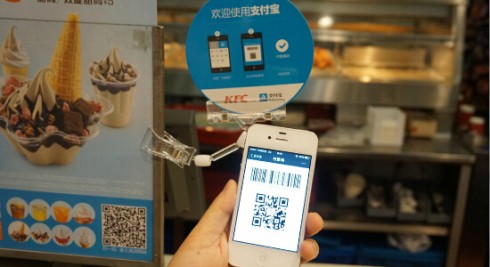
Bluetooth for smartphones. In contrast, WeChat and Alipay are using camera to
scan the QR code to pay. This allows almost all smartphone users to use mobile
payments. Other apps that support all devices such as PayPal, does not have a
mobile payment function.
Consumption habits is another reason that
hinders the development of mobile payments in the United States. From fancy
clothing stores to street food vendors, most shops support scan QR code for
mobile payment in China. People are happy to use mobile payments, and many
people don't even carry their wallets when going out. Smartphones are enough
for most cases. In the US, cash and credit card are the two most popular
payment methods. People are not accustomed to using mobile payments, and most
businesses do not support mobile payments. But in the US, the payment market
has matured, which makes it difficult to implement new payment methods.

In the US, Seattle became one of the first
cities in which several sharing bicycle companies deployed their bicycles.
Sharing bicycles of different colors have appeared in Seattle. Companies
operating here include Limebike, Spin, and OFO. Seattle has becoming the first
stop of those sharing bicycle company in the US because local government’s policy support is the key. At the
end of March 2017, the Seattle government run sharing bicycle with hubs project
Pronto was officially closed. After the failure of its own efforts, the Seattle
government welcomed the sharing bicycle companies, and Seattle became the first
government to issue licenses to dock
less sharing bicycle companies. In order to comply with the law, sharing bicycle companies will provide some free
helmets, smartphone apps will also remind users to wear helmets. For bicycle lanes and other traffic problems,
shared bike companies are working closely with the Seattle Department of
Transportation (SDOT) to provide assistance to municipal transportation
planning through their data. In June 30th, SDOT released regulations for shared
bicycles. Including safety standards, insurance rules, parking regulations and
so on.

Seattle is the first city in the United States
to enact regulations on shared bicycles and is likely to become a model for
many cities in the United States and many other parts of the world. Currently
operating three sharing bicycle companies in Seattle are all dock less funded
by venture capital companies. With smartphone apps and GPS positioning and
other similar functions. Competition is unavoidable. In the case of similar
function, the competition is probably about price and customer service. Because
the sharing bicycle has just started in the United States, the current size of
the market is limited. The competition is not intense yet. However, when
sharing bicycles enter other major cities, it is foreseeable that there will be
a new round of business competition in the US market in the future.
评论
发表评论